Cloudy Nights Stories
Sometimes the sky is overcast and the telescope stays in the cupboard. These are gentle, imaginative stories about stars, constellations, and the people who first named them. Written for reading aloud on nights when you can't see a thing. They work at bedtime, on rainy afternoons, or in the back of the car. Best for ages 4 to 8, but older kids have been known to listen in.
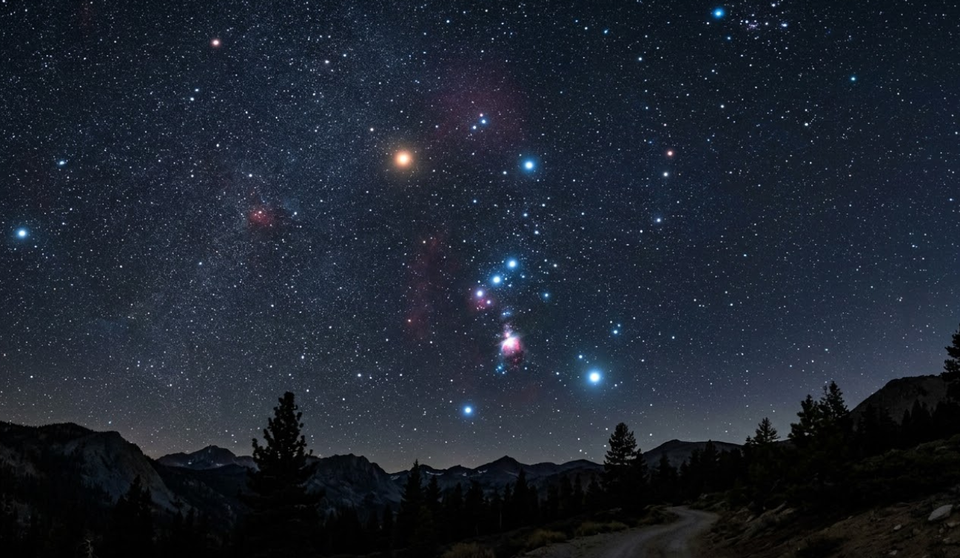
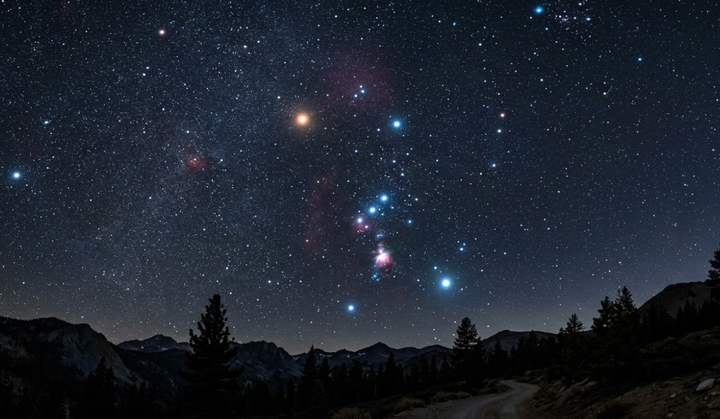
The Night We Met the Hunter
Ages 8-12. Nell went outside during a power cut and the sky filled with stars. Her dad pointed out Orion. She learned that the hunter's shoulder is a dying red giant, his foot burns 120,000 times brighter than the Sun, and the whole constellation only looks like a hunter from where she stood.

The Planet That Spins the Wrong Way
Ages 8-12. "So if I lived on Venus," she said slowly, "I'd have my birthday before the Sun came up?" "You'd have your birthday before the Sun came up twice." "And the Sun would rise in the…" She stopped. Worked it out. "The west?"

The Night the Sky Fell
Age 5-8. Something moved. A line of light. Quick and bright. It slid across the sky like someone had drawn on it with a white crayon. "Did you see that?" Lila whispered. She held very still. Her eyes wide. Then another one came.

The Day We Built an Eye Big Enough to See the Beginning
Age 8-12. Lena pressed her finger against the faintest red dot on the screen. "This galaxy. When this light left, did Earth even exist?" "No. Not even close. The Sun hadn't formed yet." She pulled her hand back like the screen was hot
The Day We Reached for the Stars
Age 6-10. We once only looked up. Then we built telescopes to see farther, rockets to climb higher, and brave little probes to travel where we could not. A telescope is a long eye. A rocket is a promise. We may be small beneath the stars — but we reach astonishingly far.

Our Solar System: Spinning Together
Ages 5-8. At the center of everything lived the Sun. All around him spun his enormous, extraordinary family. Planets, moons, comets, and more. Different in every way. Bound together by gravity, and traveling as one.
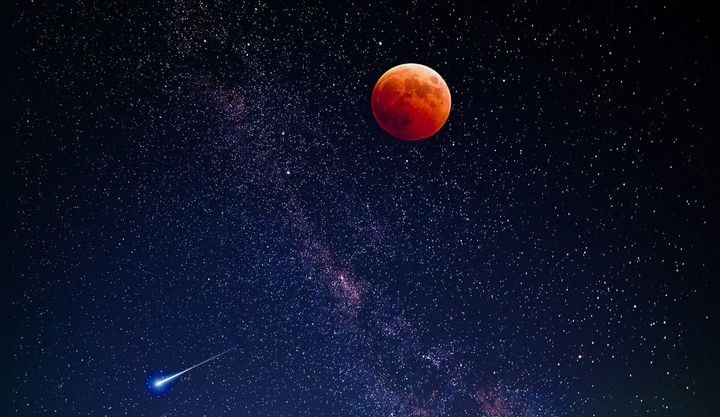
The Moon and Human Imagination
Ages 8-12. Look up. Maya squinted at the Moon. "Does it look like a face to you?" Some people saw a rabbit. The Māori saw a woman grabbed by the Moon. Galileo saw craters. 12 astronauts left footprints still up there. Maya grabbed a pencil to draw what she saw.

The Universe That Kept Growing
Ages 5-8. Once, everything in the universe was cozy and close, like a warm blanket. Then it took a slow breath. In… out… and space began to stretch. Galaxies drifted apart. Light traveled farther. The universe wasn’t breaking it was growing, making room for stars and planets.

The Sleepy Cloud That Learned to Shine
Ages 5-7. Long ago, in the quietest corner of space, a sleepy cloud drifted. Not fluffy, but huge, made of tiny bits of gas and dust. Little by little, the pieces pulled closer. Warmer. Brighter. Then - whoosh! The middle lit up. A star was born, shining gold in the dark.

The Day We Held the Whole Earth
Ages 7-9. Maya held a blueberry up to the kitchen window and squinted. "Is this really how big we are?" Her brother had shown her how far the stars were. Now she wanted to understand how big we are. So we went outside with a bowl of fruit and built the solar system on the driveway.

The Day We Shrank the Solar System to Fit on a Football Field
Ages 7-9. If the Sun were a grain of sand, the solar system would fit on a football field. We walked 4 miles to reach the nearest star. Our fastest spacecraft? One inch per hour. Marcus said impossible things are the only ones worth figuring out.