Non-Technical Parent
This section is for the parent who just watched their child open a robotics kit containing forty-seven pieces of plastic and a manual written entirely in assumptions. You don't need to know what a servo motor does. You don't need to have an engineering background. You need someone to tell you which bits matter, which bits you can safely ignore, and what to do on the evening when nobody wants to touch it anymore.
How Salt Makes Ice Cream
Isla had checked the freezer three times. There was no ice cream. We made some anyway, with salt, ice, and a freezer bag. Ten minutes of shaking later, the cream gave up and froze. She now explains the fridge to anyone who will listen.
Should You Sign Them Up for a Robotics Club?
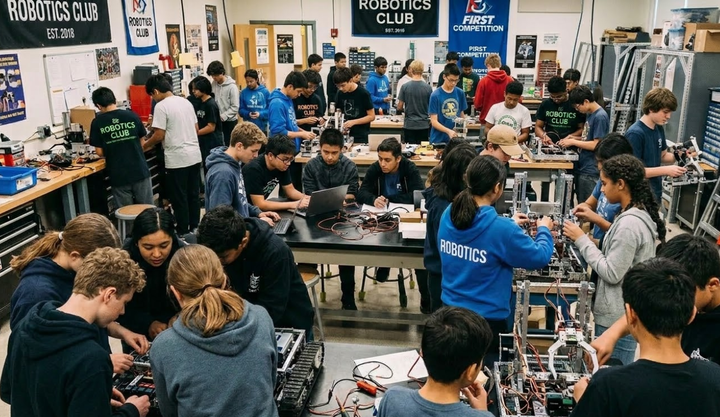
The most valuable thing about a robotics club isn't robotics. It's being in a room with other children who are interested in how things work. For some children, that room is the first place they've felt like their kind of thinking is normal.

The Kit Arrived on a Tuesday
47 pieces of plastic and a manual that opened with "ensure your firmware is updated." That was the moment I understood what being a non-technical parent actually means. Not that you can't help - you can. But the help looks different to what you expected.
What's Actually Happening When Your Child Programs a Robot
They're not learning to code in any language you'd recognise. Block-based programming isn't Python. It's not going to give them a head start in a computer science class in five years. That's not what it's for. What they're actually learning is how to debug.

Robotics Beyond the Living Room: What's Actually Out There
Further than most parents realise, and for less money than the hobby typically gets credit for. Libraries run drop-in sessions nobody advertises. Competition teams ask more, but the children who click with them really click. Here's what's genuinely out there.

STEM Isn't What You Think It Is
Most parents who say they're not "science people" had one bad teacher. A classroom where being wrong was embarrassing and the method mattered more than the curiosity. That's not STEM. That's a particular kind of bad science lesson, and it has a lot to answer for.