Science Experiments
You don't need a lab coat or a chemistry set. Most of our experiments use things already in your kitchen - lemon juice, baking soda, food colouring, salt. Each one takes under 30 minutes, works for ages 4–10, and teaches a real scientific concept (not just "mix things and watch them fizz"). We write these as stories because that's how kids actually experienced them. The science is real. The spilled lemon juice is also real.
The Penny Bridge
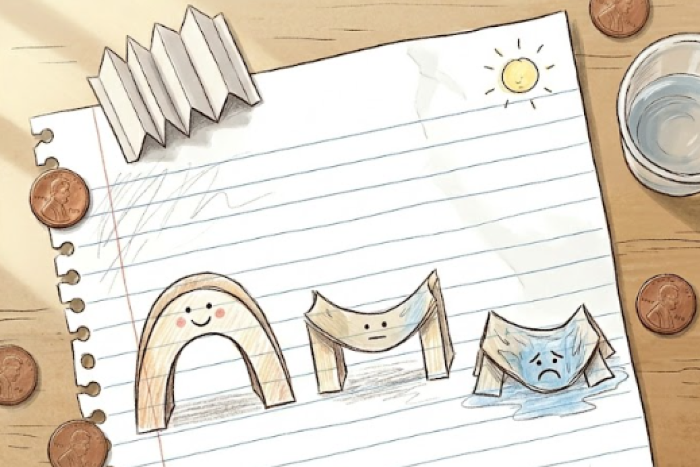
A flat sheet of paper holds one penny before it gives up. Fold the same sheet into a concertina and it holds twelve. Sam was eight, in wet socks, and wanted to know why real bridges don't bend. Twenty minutes at the kitchen table, and he worked it out himself.
The Day We Launched a Marshmallow
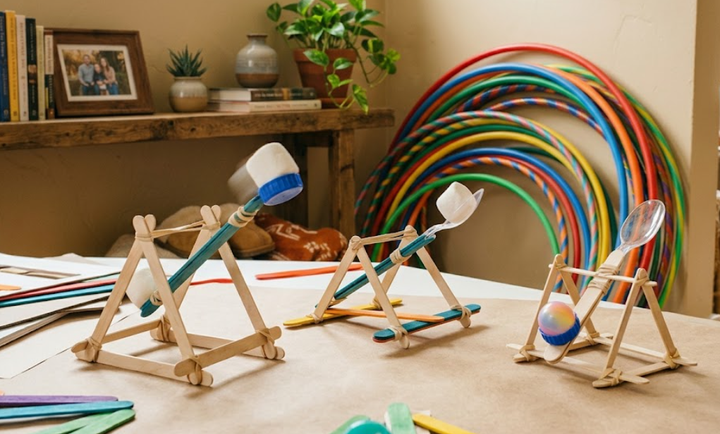
It started because Noor wanted to launch a marshmallow. Not eat it. Launch it. Five popsicle sticks, a rubber band, and one very determined child later. She called it "the stick being angry."
Roads for Electricity
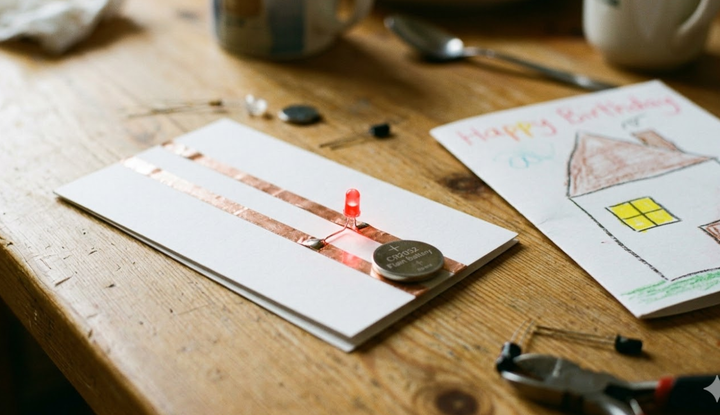
He pressed the battery down and the LED lit up. Red, steady, undeniable. "I made that happen," he said. "With tape." Then he built his mum a birthday card with a glowing window and copper tape roads hidden on the back. She asked if he'd made it. "I built a circuit. On paper. With roads.
The Egg Drop Challenge
It started because Noor had been dropping things all morning. A sock. A rubber ball. A piece of toast she claimed was 'already ruined.' Then she picked up an egg. We needed a helmet. For an egg. She was already holding the cotton wool.
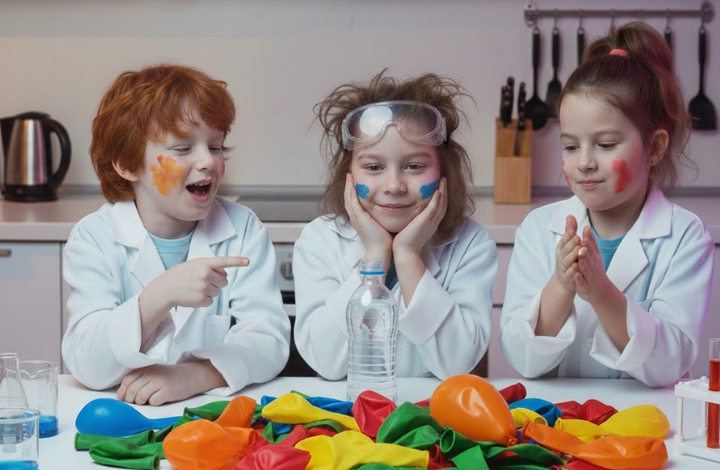
The Balloon That Inflated Itself
One dad inflated 30 balloons at a party and then sat down and didn't move. There had to be a better way. So we raided the kitchen cupboards and watched a balloon fill itself entirely on its own. 5 minutes, and the fizzing alone is worth it.
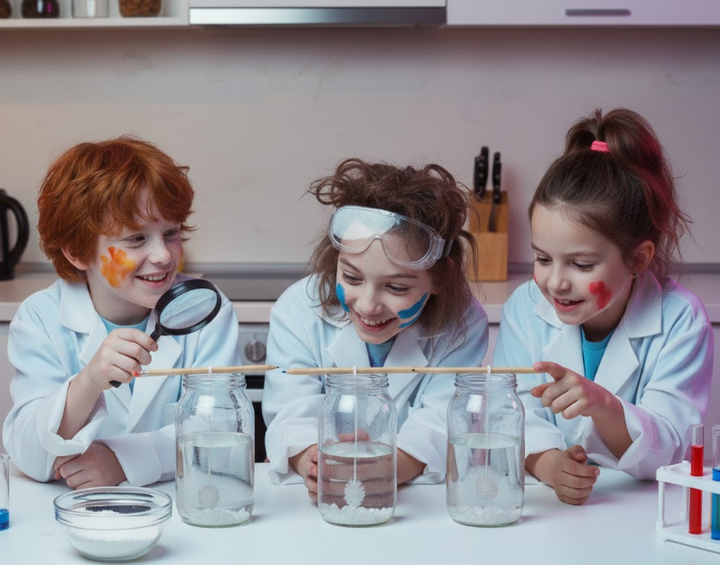
How to Grow Salt Crystals at Home
She added salt, stirred until it dissolved, added more, stirred again. We kept going until the salt stopped dissolving no matter how hard she stirred. 'Why won't it mix anymore?' 'Because the water is full. Saturated. It can't hold any more.

The Day We Broke Milk
"She chose red, then yellow, then blue. They sat there, small and still. Then the soap touched the milk and the colours exploded outward. Priya yanked her hand back, made a noise that wasn't quite a word, and said: 'Do it again.'"

The Dancing Raisins Experiment
Theo dropped the raisins in. They sank. Then, slowly, one started to rise—up through the lemonade, bobbing at the surface, then sinking again. Then rising. "It's dancing," he whispered. Turns out carbon dioxide bubbles have opinions about dried fruit.

The Invisible Ink Operation
Making invisible ink with lemon juice turns into a full spy operation when an 8-year-old tests different liquids to see which works best. Lemon juice and milk win; vinegar works but smells awful when heated. By morning, she's left secret messages hidden around the house for her parents to decode.
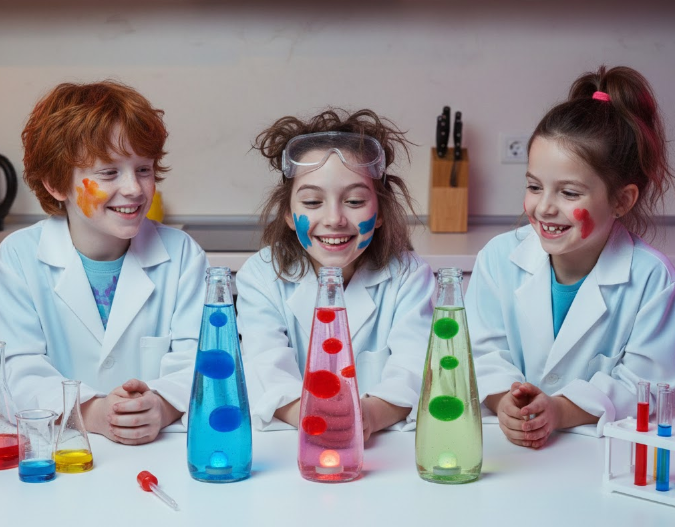
The Lava Lamp Afternoon
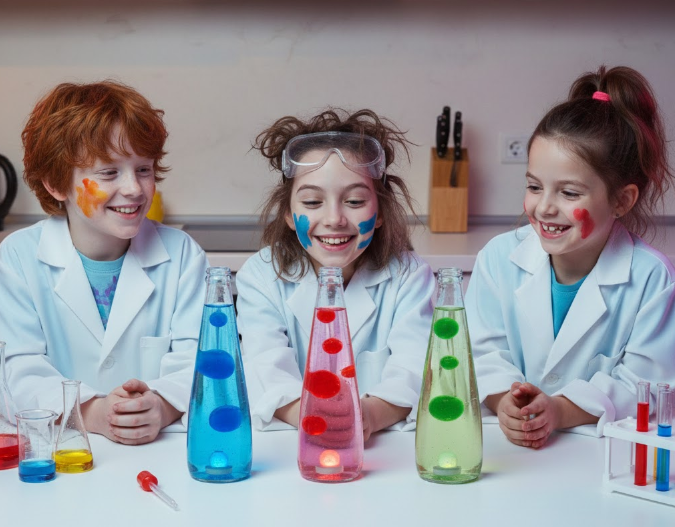
Imagine spending an afternoon making a lava lamp, accidentally covering her hair in vegetable oil, and accidentally teaching her about density. Here's how that afternoon might go
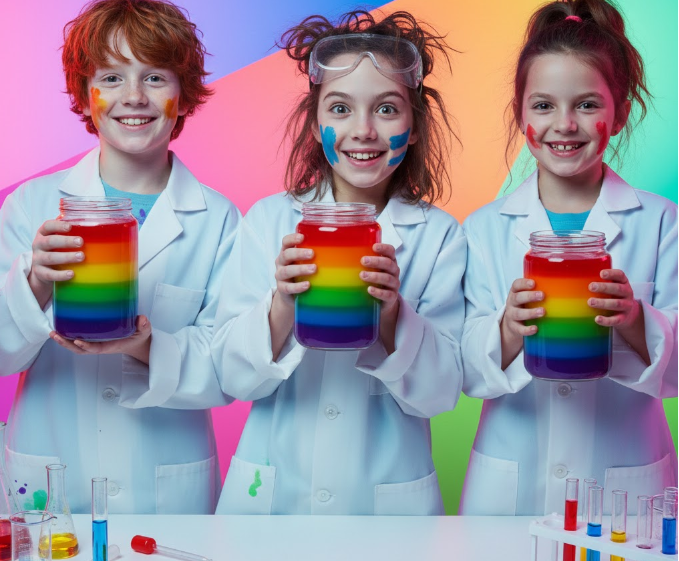
The Rainbow in a Jar
Pour them carefully into a glass, and instead of mixing together, they'll stack in separate layers — heaviest at the bottom, lightest at the top. It looks rather odd at first, but it's just physics doing what physics does.
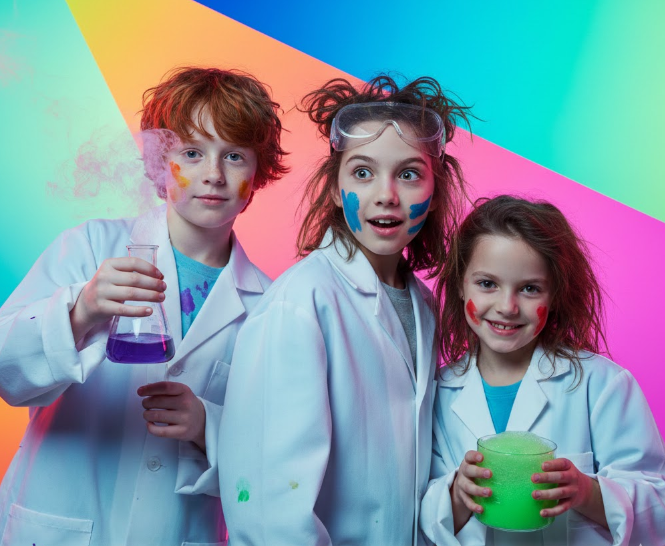
Science Experiments: What Can Go Wrong?
It's rarely the kit. When a science experiment falls flat — the volcano barely fizzes, the child loses interest halfway through — the instructions usually aren't the problem. It's almost always one of a handful of things that are easy to fix once you know to look for them.

The Age When Everything Is Worth Testing
It started because Finn wanted to know if his toy boat would sink. He'd been dropping things into the bath for weeks, watching some float and some sink with the focused expression of someone running an important study. He had theories.