Robotics News
Real robots doing strange things. A Rubik's Cube solved in 0.103 seconds by four undergraduates. A robot controlled by mushroom mycelium. Humanoid machines clocking real warehouse shifts. These are the stories worth knowing about, picked because they raise questions worth asking and explained so a curious child and a non-technical parent can follow the same conversation. Not every story makes the cut. The ones here do.


Humanoid Robots Have Started Showing Up for Work
Robots that walk, carry boxes, and work alongside people are no longer science fiction. They're showing up for real shifts in real warehouses. Here's what's happening with humanoid robots, and why it's worth talking about with your child.
The Robot That Runs on Mushrooms
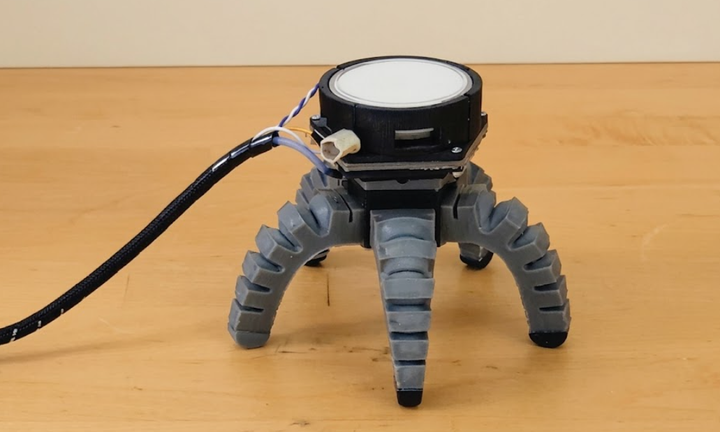
A robot at Cornell University walks on five soft legs, controlled not by code but by mushroom mycelium growing into its electronics. When the fungus senses light, the robot changes its gait. Nobody reprogrammed it. The mushroom decided.
The Robots That Solved the Hula Hoop
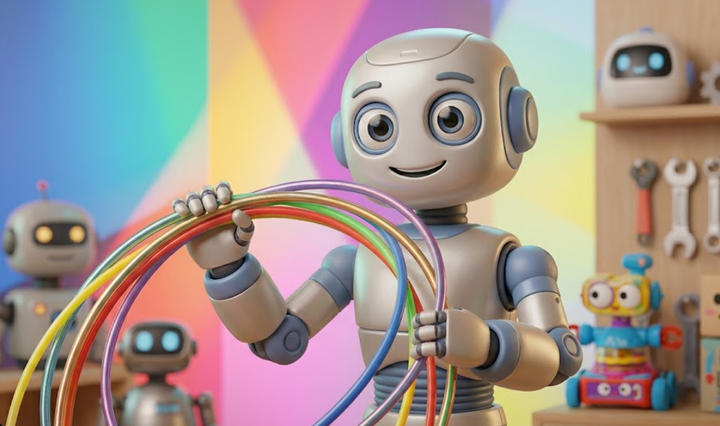
Nobody had explained how a hula hoop stays up. It took a mathematician watching street performers and a set of 3D-printed wiggling robots to crack it. The answer involves geometry, gravity, and a toy everyone knows doing something nobody had understood.

The Robot That Thinks With Its Legs
A soft-bodied robot made from elastic tubes can walk, hop, and swim, powered by nothing but air. No computer, no sensors, no code. Scientists at AMOLF in Amsterdam built it, and the physics behind it started with those wobbling inflatable tube men outside car dealerships.

The Robot That Folds Your Towels (Slowly, and With Help)
Six companies launched home robots in 2025. They can fold towels, load dishwashers, and sort laundry. They also can't close an oven door, handle sharp objects, or work unsupervised. The living room robot is finally real. It just needs a bit of help.

The Robot That Solves a Rubik's Cube Before You Can Blink
A Rubik's Cube, fully scrambled, solved in 0.103 seconds. Not by engineers at a major corporation, but by four undergraduates at Purdue University. Their robot solves the cube before you can blink. What does "solving" mean when the solver has no experience of the puzzle?

The Country Building Robots Faster Than Anyone Expected
The robot stands 1.73 metres tall and weighs 75 kg. Its body has 29 degrees of freedom, with seven in each hand. The T800 is a good conversation starter about the difference between what a robot can do in a controlled demo and what it can reliably do in the real world.
A Robot Made a Portrait. It Sold for $1 Million
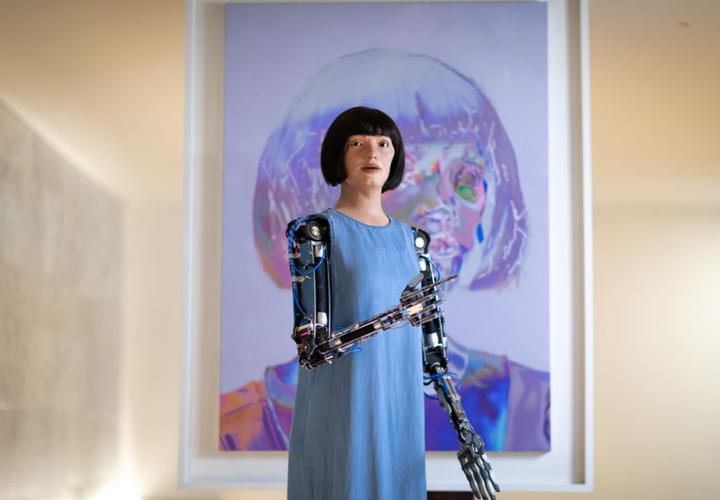
A robot named Ai-Da sold a painting at Sotheby's for $1.08 million - six times the estimate. The subject? Alan Turing, the man whose ideas made AI possible. Can a robot be creative? That's exactly the question worth asking your kids in this AI age

The Machine That Watches the Referee
The machine doesn't argue. It doesn't gesture. It just watches and when you tap your helmet, it tells you whether the referee got it right. Baseball is the latest sport to hand technology a seat at the table. Here's what that means for all of us.

The Robot That Fits on a Fingerprint
Researchers have built the world's smallest programmable robots- smaller than a grain of salt. They swim, sense temperature, and communicate by dancing. For kids who've ever asked how small a robot can get, this is the answer. At least for now.

What Happened When Robots Ran a Real Race
21 humanoid robots lined up for a real half marathon in Beijing (no simulation, no lab). Some stumbled, one needed helping up, and the fastest finished in 2h40. Not beating humans yet, but closer than anyone expected just five years ago.